This week: when an honest complaint becomes disproportionate punishment (TY Kelly Clarkson), the AI jobs women are being left out of, a Santana Row date night worth the Resy credit and the sandals that refuse to leave this newsletter.
Career. Style. Restaurants. Life upgrades. And whatever else happens to be living rent-free in my brain that week. Every Thursday. Happy you're here!
BOOKMARK THIS
🤎 Ask the Archive — your shortcut to every recommendation, restaurant map, and answer: https://ask.gabriellas-edit.com/
🤎 My Amazon storefront — finds, beauty, home, little life purchases: https://www.amazon.com/shop/gabriiellas15
🤎 My ShopMy — outfits, shoes, accessories, everything I wear: https://shopmy.us/gabriiellas
🤎 Barry's free first class: https://share.barrys.com/gabbysep15!4ba0f95fc8!a
🤎 Subscribe for a discount on your first lash appointment at Pampered Nail Salon — DM me after for the code
🤎 Subscribe for a discount on your first nail appointment at Blossom Nail Lounge — DM me after for the code
What's Got Me Thinking This Week
Every week, I tell you about the restaurants I loved, the products that earned a spot and the places I think are worth your time.
What I don’t talk about as often is what I don’t recommend.
I’ve had disappointing meals. I’ve dealt with bad service. I have absolutely written an angry little review in my Notes app and imagined delivering justice from my couch.
Most of the time, though, I simply never go back.
Then a celebrity, a Brooklyn shop and a $15,000 mechanical bird made me wonder: when does telling the truth about a bad experience become its own kind of unfair?
THE BIG THOUGHT
A Bad Review Is Not the Same Thing When 44 Million People Are Listening
For those of you who missed it, here's the TLDR:
Kelly Clarkson recently visited Art of Play, a small Brooklyn shop filled with games, puzzles and expensive curiosities.
She says she asked about purchasing Molly, a singing mechanical bird, and was treated as though she couldn’t afford it. According to Kelly, the staffer looked her up and down, said in a condescending tone that the bird cost $15,000 and offered to find her “something comparable”—which she took to mean they had already decided the bird was beyond her budget. She compared the interaction to the shopping scene in Pretty Woman and named the store in a post to her millions of followers.
The store says Molly was permanently attached to the wall and wasn’t available, although its creator could make a similar bird for $15,000. Kelly disputed that explanation. The store responded again. Kelly responded again.
The original post was eventually viewed more than 44 million times. Reviews from people who had never visited started appearing. The owners reported hateful messages and said someone even showed up at the store. What began as one person’s version of an uncomfortable interaction became an international argument over an animatronic bird. I know right.
The newest plot twist is silent security footage showing that Kelly was inside for just four minutes and 50 seconds. It confirms how brief the entire interaction was—but, with no audio, still cannot tell us what anyone actually said. More evidence, somehow still no shared reality.
And I need to say this first: Kelly’s feelings can be real.
Being looked up and down in a store is awful. Every woman has had some version of that Pretty Woman moment—although most of us do not get to return carrying seventeen shopping bags…
Small businesses also do not get a free pass to be rude simply because they are small.
But I have been thinking about what happens after the bad moment.
A while ago, I went to a very hyped brunch spot in the city. The host was openly rude, and we waited 45 minutes past our reservation. I had the draft in my Notes app and everything.
But I kept thinking: this is someone’s dream. Their lease. Their employees’ paychecks. One bad Saturday does not necessarily tell the whole story of a place, and my post would live online much longer than the interaction did.
So I never posted it. I also never went back.
Kelly Clarkson had a bad five minutes and posted to 8.8 million followers. I had a bad two hours and posted to nobody.
The experience-to-audience math matters.
That doesn’t mean people with large audiences should only say nice things. It means the story may remain exactly the same while the consequences become completely different.
A normal customer can leave a one-star review. A celebrity—or even a creator with a large, engaged audience—can accidentally send an entire volunteer army.
Once that happens, the punishment can grow far beyond the original offense. People who were not in the store begin leaving reviews. Employees who had nothing to do with the interaction get threatening calls. The business is no longer responding to one customer. It is defending itself against millions of strangers who have chosen a side.
The owners of Art of Play called it “asymmetrical social warfare,” which is dramatic—but also…not wrong.
So what should happen before the public blast?
My current playbook is very boring, which is why it probably works:
Talk to a human in the moment. Ask for the manager. Send the email or DM. Give them a little time to respond. Ask for the fix privately and keep the receipts.
Then, if you decide to post, include that context.
“I spoke to the manager and emailed twice” lands very differently from a surprise attack. It also protects you when the other side inevitably responds with its version.
There are situations where a public warning is completely justified: safety issues, scams and discrimination.
Food poisoning. An ignored allergy. A brand accepting preorder money and disappearing. Someone being treated differently because of how they look.
Those are warnings that might protect the next person.
A single rude interaction is still a bad interaction. But a public warning should be reserved for something the next customer genuinely needs to know—not simply the feeling that someone deserves to be punished.
The funniest ending to this whole story is that Art of Play has now raised Molly’s price to $15 million.
Honestly? That may be the only proportionate response in the entire saga. Pure comedy.
You are allowed to tell the truth about what happened to you. But if millions of people are listening, you also should probably think about what happens after you tell it.
The story doesn’t change.
The consequences do.
Thoughts, opinions, questions?
One Thing I Learned
Review Bombing

The concept:
A review is supposed to answer a fairly simple question: What happened when you personally visited, purchased or used this business?
Review bombing happens when a business becomes part of a public controversy and people who were never customers flood its profile with ratings based on the story—not firsthand experience.
The ratings can move in either direction. One side leaves one-star reviews as punishment. The other side rushes in with five stars as a defense. Either way, the score stops reflecting what it claims to measure.
Yelp has a system for detecting unusual activity and may temporarily restrict reviews or remove those unrelated to genuine customer experiences. In one reporting year, the platform said it removed more than 70,000 reviews associated with review-bombing activity.
Read Yelp’s Trust and Safety report
In plain English
If you have never eaten there, stayed there, hired them or bought anything, you are not reviewing the business.
You are voting on an internet argument.
What I’m stealing from this
I can have an opinion about a story without touching the stars.
Share the article. Discuss what happened. Decide you do not want to visit. But do not manufacture consumer evidence for an experience you did not have.
WHAT I WORE
Office Hours, Then Dinner
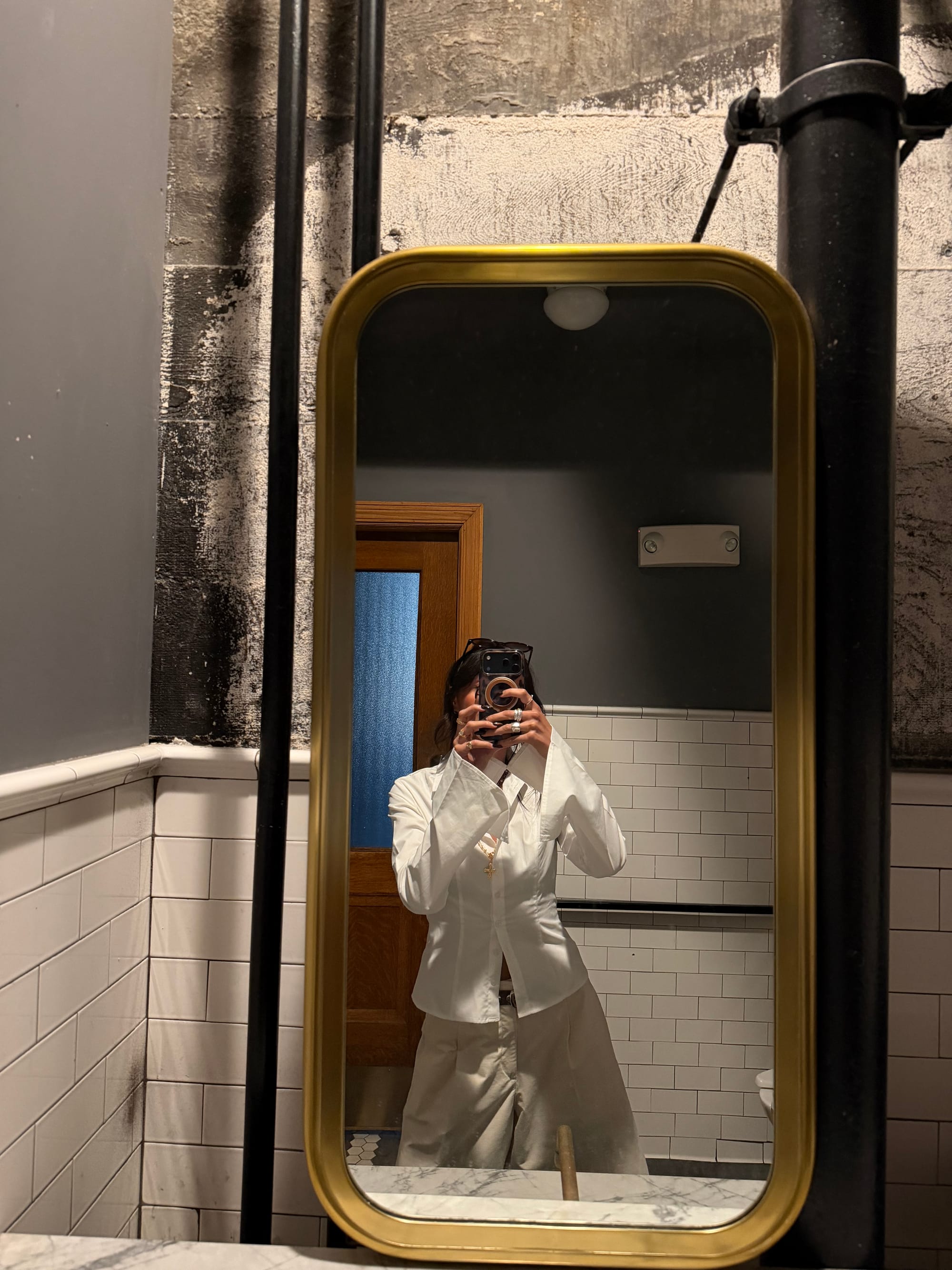
What it is: A fitted white seam-detail shirt with long ecru Bermuda shorts. The collection includes both textured-denim and ivory linen-look options, depending on how structured you want the bottom half.
Why it worked: The fitted top keeps the longer shorts from swallowing the look, and the all-white palette makes two very easy pieces feel intentional. Comfortable—but still looks like I made a decision.
Perfect for: An office day that becomes drinks, dinner or both.
WHERE WE ATE
Suspiro: Date Night With an Afterparty Built In

Paak and I went to Suspiro for date night—and to use our Amex Resy credit, because romance but also benefits.
We ordered the paella de carne, shrimp skewers and white aguachile.
The paella was delicious and HUGE. It can definitely feed more than two people, so please do not order like we did unless you enjoy leaving with tomorrow’s dinner.
The shrimp skewers were small, but the sauce was fire. I would have ordered another round.
We went early and checked out the speakeasy in the back, which was fully decorated for Halloween with an autumn cocktail menu. The drinks were great, the interiors were on point and the entire place felt like an actual night out—not just dinner.
Also, the hostess was amazing. They accidentally made the wrong drink, so we ended up with an extra Old Fashioned.
Not mad at it.
Perfect for: date night, girls’ dinner or anyone who enjoys one reservation becoming an entire evening.

ON MY LIST: DINNER AFTER EVERYONE ELSE’S KITCHEN CLOSES
Lillie Coit’s is a new North Beach tavern serving oysters, French onion soup, steak frites and cocktails until very late.
The genuinely useful part: its kitchen serves until 1 a.m., it doesn’t take reservations and the nightly Oyster Jubilee is buy six oysters, get six more free from 10 p.m. to 1 a.m.
Save this for when the original dinner plan fails but nobody is ready to go home.
ON MY LIST: THE OAKLAND LATE-NIGHT SLICE
June’s Pizza is an Oakland warehouse pizzeria with an extremely short menu: margherita, pepperoni and a rotating seasonal pie.
After 9 p.m., it starts serving slices in a room that sounds closer to an Oakland house party than a traditional pizza shop. DJs and album-listening parties occasionally included.
Save it for the Friday night when “let’s grab one slice” is very obviously not the full plan.
More reservations worth making
The Career Gap Behind the AI Boom
The AI Gap Isn’t About Who Can Prompt. It’s About Who Gets to Build.

“Learn AI” has become the new career advice everyone gives and almost nobody explains.
Learn what? Which tool? For which job? Am I supposed to become an engineer by Tuesday?
The advice is especially incomplete because knowing how to type a good prompt is already becoming the baseline—not the advantage.
Workday analyzed job postings across more than 550 employers and found that demand for basic AI skills, including simple prompting, peaked in January and then dropped 25%. Meanwhile, demand for hands-on skills such as building AI tools, automating workflows and AI engineering increased 51%.
Companies are moving from “Can you use AI?” to “Can you build something useful with it?”
And the money attached to that shift is not small. LinkedIn found that U.S. AI job postings have roughly doubled since 2023, with typical listed compensation around $177,000 versus $80,000 for non-AI roles. Women accounted for only 26% of U.S.
AI hires in 2025 and hold just 13% of C-suite AI roles at AI companies across the 27 countries studied. Even the increasingly common “member of technical staff” role is only 18% women.
That is why I don’t think this is simply a prompting gap.
It is an access gap.
Who gets invited onto the experimental project? Who has a manager who lets them spend time testing something that might fail? Who has access to the technical team? Who can disappear into a new tool for six hours without the rest of their responsibilities falling apart? Who gets described as innovative—and who gets asked to take notes?
The answer cannot be another version of “women need to work harder and learn more skills.” Plenty of women are interested and capable.
The question is whether they are getting the time, infrastructure, sponsorship and real projects that turn curiosity into experience.
And “building with AI” does not mean everyone needs to become a machine-learning engineer.
It might mean automating a repetitive workflow. Prototyping an internal tool. Creating a better research system. Connecting information that currently lives across five spreadsheets and fourteen Slack threads. Testing something, measuring whether it worked and being able to explain why it matters.
The people who benefit most from this shift may not be the people who know the most impressive AI vocabulary.
They may be the people who are allowed to solve a real problem with it.
THINGS MAKING LIFE EASIER
The Plates That Also Work for the Camera

I bought this stoneware set for hosting and photographing food.
I need dishes that make the table look finished but also make whatever I cooked look like I had a plan. These can pull their weight both ways.
Perfect for: hosting, food photography and making a regular Tuesday dinner look slightly more intentional.
Shop the stoneware dinnerware set
Yes, These Sandals Are Back
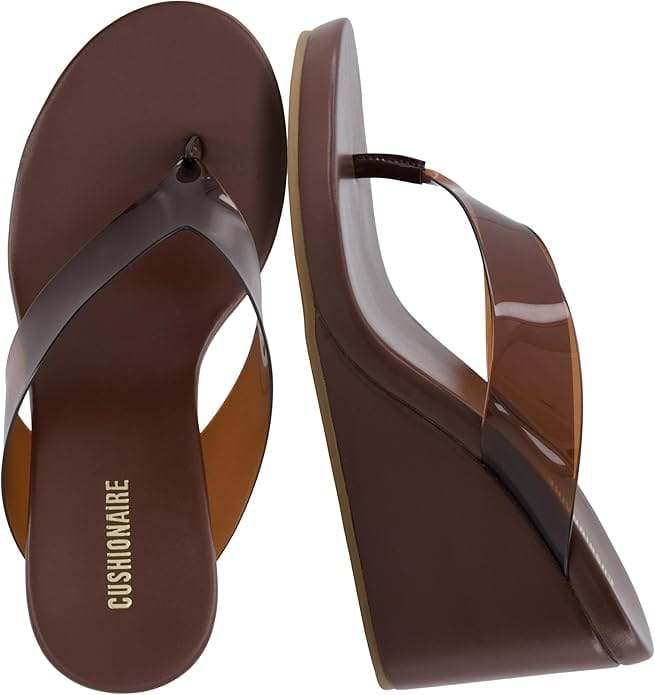
Yes, I already featured these.
No, that is not an error.
The CUSHIONAIRE platform sandals are so damn comfortable that they have earned a repeat appearance. Cute shoes that can survive an actual evening should be rewarded.
Perfect for: date nights, vacations and any plan where painful shoes would turn dinner into a shift.
CLOSING VIBES
Bathrobe Weather + Ballroom Discourse
One Little Thing: Bathrobe Weather
Bathrobe weather is officially back.
After that massive, completely random heat wave, putting on my robe again has felt like being reunited with an old friend.
Internet Rabbit Hole: Dancing with the Stars Clips
I randomly started watching Dancing with the Stars clips because Ciara Miller from Summer House is competing.
I am not watching the entire show—let’s be serious—but now the algorithm has me monitoring Jenna Dewan and Val Chmerkovskiy like I work in ballroom HR.
People are mad that Jenna is too good, even though she began her career dancing for Janet Jackson and starred in Step Up—which turns 20 this year, excuse me while I process that privately. Jenna’s counterpoint is that ballroom is a different language and has required her to “almost unlearn” some of what she already knows. So yes, the woman can dance. But no, being able to dance does not automatically make you a ballroom dancer.
Then the internet decided that convincing choreography means she must be in love with her partner, and her fiancé had to jump into the comments.
I came for Ciara and accidentally inherited ballroom discourse.
UNTIL NEXT WEEK
Thank you for spending part of your week with me—and with Molly, the now-$15-million bird.
I want to know where your line is: are safety, scams and discrimination the only reasons to put a business on blast, or is truly terrible service fair game?
Don’t forget to check out the Weekend Plans issue in your inbox after this!
xx,
Gabriella